
How to Adapt Your Spa SEO Strategy to Google Updates
Oct 30, 2026


A well-designed landing page can make a significant difference in how potential customers interact with a spa website. When visitors arrive from search engines, they expect relevant information, attractive service descriptions, and an easy way to book appointments. However, even a website with good search rankings may struggle to generate inquiries if its landing pages fail to meet customer expectations. Testing different landing page elements helps spa businesses understand visitor behavior, improve user experience, and increase conversions.
Landing page testing is an effective way to identify what works best for your audience. By combining data analysis, content improvements, and user experience optimization, spa owners can strengthen their online presence and achieve better results from their SEO efforts.
Before starting any testing, define what you want each landing page to achieve. A spa website may have different pages for massage therapy, skincare treatments, body wraps, facials, and wellness packages. Each page should focus on a specific service and address the needs of its intended audience.
For example, someone searching for a relaxing massage may want information about treatment benefits, session duration, pricing, and booking availability. A landing page that provides these details clearly can encourage visitors to explore further.
Headlines are among the first elements visitors notice when opening a landing page. A clear and engaging headline communicates the main benefit of a service and encourages users to continue reading.
Try testing different headline styles to discover which attracts more engagement. For example, compare a general headline such as “Professional Spa Treatments” with a more specific option such as “Relax and Refresh with Personalized Spa Treatments.”
You can also experiment with page titles and meta descriptions to improve how your pages appear in search results. Keep them relevant to the actual page content and naturally incorporate target keywords.
Remember that better click-through rates should come from accurate, useful descriptions rather than misleading promises.
A call to action (CTA) guides visitors toward the next step. On spa landing pages, common CTAs include “Book an Appointment,” “Explore Treatments,” and “Contact Our Team.”
Testing different CTA wording, placement, and design can help identify which options generate more interactions. For example, a booking button placed near the service description may perform differently from one located only at the bottom of the page.
Consider testing:
Make sure every CTA communicates a clear action and supports the primary purpose of the landing page.
Landing page testing provides valuable insights into how visitors interact with website content. If users leave a page quickly, they may not be finding the information they expected.
Review engagement data to identify possible content problems. Important service details should appear naturally within the page, including treatment descriptions, benefits, pricing information, preparation guidelines, and frequently asked questions.
Use clear headings, short paragraphs, and informative descriptions to make content easier to understand. Avoid unnecessary keyword repetition because it can reduce readability.
Images influence how visitors perceive a spa business. High-quality photographs of treatment rooms, facilities, products, and spa environments can help establish a professional impression.
However, visual elements should support the page rather than distract visitors from important information.
Test different image placements, layouts, and visual styles to understand what encourages visitors to engage. Use authentic photographs whenever possible and ensure that images accurately represent your services.
For SEO benefits, optimize image file sizes, use descriptive file names, and add relevant alt text. These practices improve accessibility and help search engines understand image content.
Many potential spa customers browse websites using smartphones. If a landing page is difficult to navigate on smaller screens, visitors may leave before completing an inquiry or booking.
Test your pages across different screen sizes to identify usability issues. Check whether text is readable, buttons are easy to tap, images display correctly, and booking forms work smoothly.
Page speed is equally important. Compress large images, remove unnecessary scripts, and improve technical performance to create a smoother experience.
Mobile optimization supports SEO because search engines prioritize websites that provide useful experiences across devices.
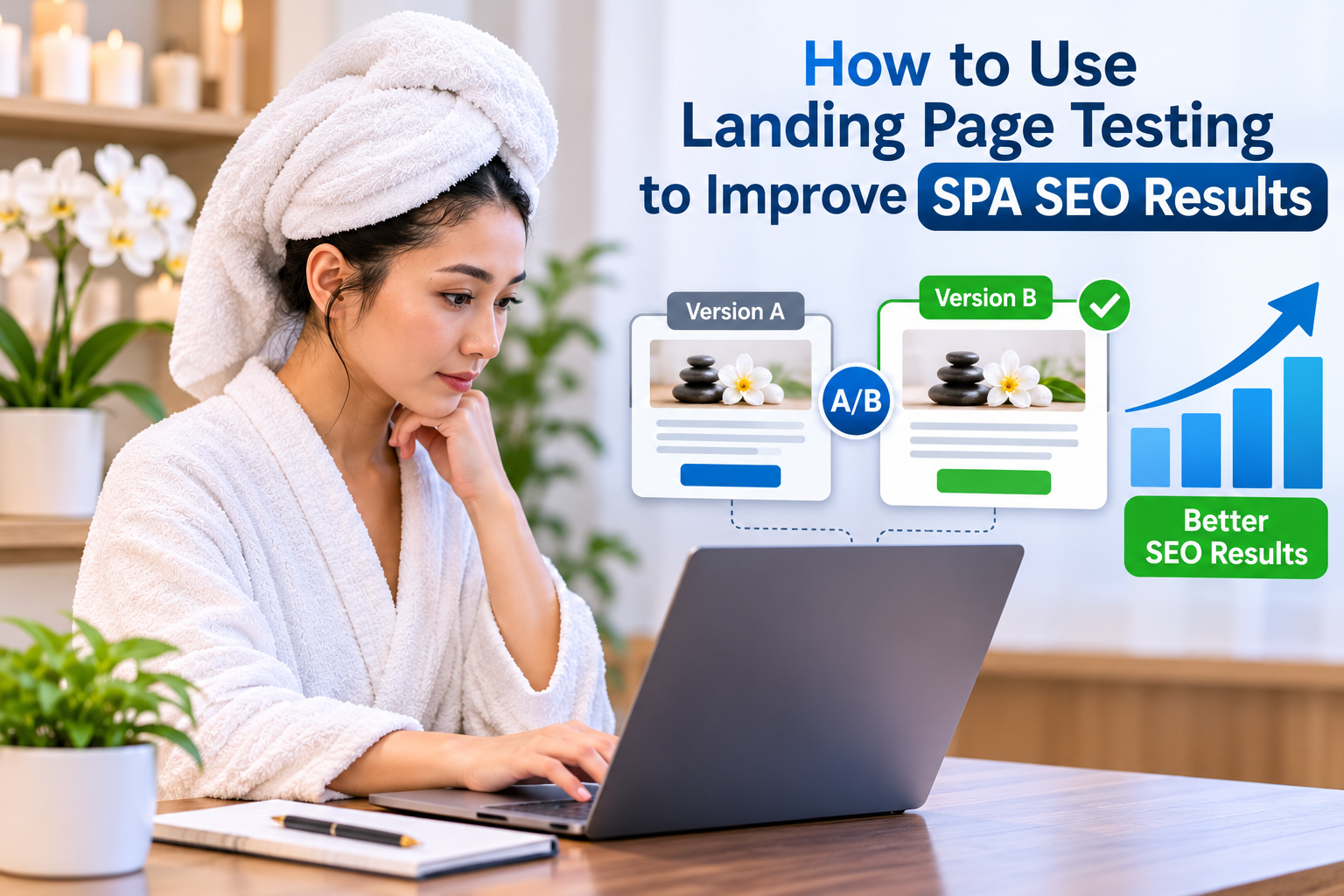
A/B testing involves creating two versions of a landing page and comparing their performance. You might change one element, such as the headline, CTA, introductory content, or page layout, while keeping other elements consistent.
For example, one version may feature a booking button at the top of the page, while another places it after the treatment description.
Measure meaningful outcomes such as:
Test one major change at a time whenever possible. This makes it easier to understand which adjustment contributed to the results.
Landing page optimization should be an ongoing process rather than a one-time activity. Customer expectations, search trends, and competitor strategies can change over time.
Use Google Analytics and Google Search Console to monitor website performance. Review which landing pages attract organic visitors, which search queries bring traffic, and where users experience difficulties.
Do not judge a test using only a small amount of data. Allow sufficient time to collect meaningful results before deciding whether a change should become permanent.
Consistent testing helps businesses make informed improvements instead of relying on assumptions. Combining these insights with Spa SEO Marketing can strengthen website performance, improve user satisfaction, and support long-term organic growth.
For additional guidance, explore professional spa SEO marketing strategies to understand how search optimization and conversion-focused website improvements can work together.
What is landing page testing in SEO?
Landing page testing involves comparing different page elements, such as headlines, content, images, and CTAs, to determine which versions provide better user engagement and conversion results.
How does landing page testing improve spa SEO results?
It helps improve content relevance, user experience, mobile usability, and engagement. These improvements can support stronger SEO performance and encourage more visitors to book spa services.
How often should spa businesses test landing pages?
Spa businesses should review landing page performance regularly and conduct tests whenever they identify opportunities for improvement. Testing frequency depends on website traffic and available performance data.
Which landing page elements should be tested first?
Start with headlines, calls to action, introductory content, booking forms, and mobile layouts. These elements directly influence how visitors understand and interact with your services.
Which tools can help with landing page testing?
Google Analytics and Google Search Console help monitor traffic and performance. A/B testing platforms can also help compare different page versions and measure conversion outcomes.
Landing page testing allows spa businesses to understand customer expectations and improve the effectiveness of their websites. From testing headlines and CTAs to improving mobile usability and content quality, every adjustment can contribute to a better visitor experience. A consistent testing process combined with Spa SEO Marketing helps businesses attract relevant traffic, improve conversions, and build a stronger online presence.